

NEWS DETAIL
Why Quartz Matters in Chipmaking
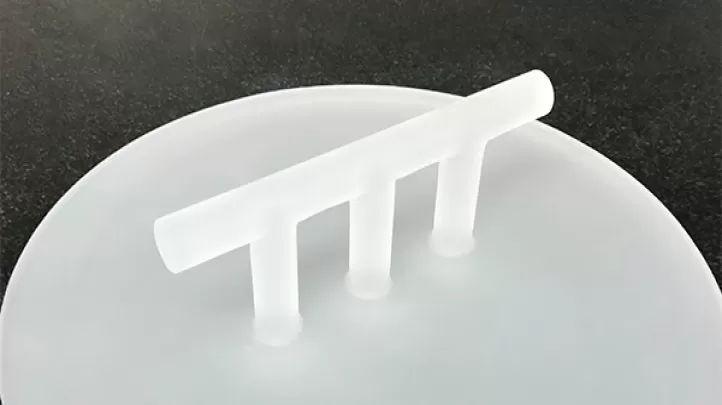
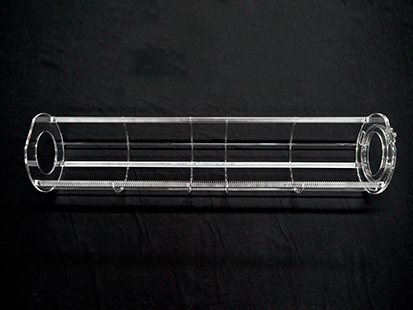
You probably use products made with computer chips every day — your phone, your car, even your refrigerator. But few people know that making those chips requires a surprisingly humble material: quartz. Pure, high-quality quartz is a critical part of the chip manufacturing process, used in the ovens, chambers, and tools that produce semiconductors. And right now, demand for it is growing faster than ever.
A Market Growing Fast
The numbers tell a clear story. The global market for quartz products used in semiconductor manufacturing was valued at approximately $2.5 billion in 2025, and is expected to reach $4.5 billion by 2033 — growing at a steady annual rate of around 7%. Meanwhile, the broader high-purity quartz (HPQ) market, which supplies raw material to chipmakers and other industries, stands at roughly $1.1 billion today and is forecast to hit $2.1 billion by 2036.
These are not small numbers, and the growth is not accidental. Three big forces are driving it.
What Is Driving the Demand?
1. The AI Chip Boom
Artificial intelligence has created an enormous appetite for more powerful chips. Building these chips requires extremely precise manufacturing conditions — even a tiny speck of contamination can ruin a batch. Quartz is essential here because it can withstand very high temperatures and doesn't react with the chemicals used in chip production. As chips become more complex, manufacturers use more quartz components, and those components wear out faster. More demand, more replacement, more quartz.
2. A Global Wave of New Chip Factories
Governments around the world are investing heavily in domestic chip production. The U.S. CHIPS Act and the EU Chips Act have triggered a wave of new factory construction. The semiconductor industry is expected to invest $400 billion in new equipment between 2025 and 2027. Every new factory needs quartz — tubes, crucibles, chambers — and lots of it. This is a one-time surge in demand layered on top of the ongoing consumption from existing fabs.
3. Electric Vehicles and Power Chips
Electric vehicles (EVs) use a different kind of chip — silicon carbide (SiC) power semiconductors — which manage how electricity flows through the vehicle. Making SiC chips also relies heavily on quartz crucibles. As EV sales grow globally, so does demand for SiC chips, and by extension, for quartz. This is an often-overlooked growth engine that compounds the pressure on supply.
A Fragile Supply Chain
Here is where things get concerning. Despite growing demand, the supply of high-purity quartz is concentrated in very few places. Roughly 95% of the world's usable HPQ comes from just two mining sites: Spruce Pine in North Carolina, USA, and Kyshtym in Russia. In 2024, Spruce Pine alone supplied over 70% of global HPQ. When a hurricane temporarily shut down operations there in 2024, it sent ripples through the entire semiconductor supply chain.
Quality is another challenge. Around 18% of synthetic quartz wafers produced globally are rejected during quality inspection due to microscopic defects. This low yield tightens supply further, even when raw material is available.
Where Is Demand Concentrated?
Geographically, Asia-Pacific is by far the largest consumer, accounting for about 45.5% of the global market in 2025. Japan, South Korea, Taiwan, and China — home to the world's biggest chipmakers — drive the bulk of this demand. However, North America is expected to be the fastest-growing region in the coming years, fueled by the wave of new domestic fabs under construction.
In synthetic quartz specifically, Japan and South Korea together account for more than 58% of global demand, reflecting their dominance in advanced chip manufacturing.
What This Means Going Forward
Quartz is quietly shifting from an industrial commodity to a strategic material. Its concentration in a handful of mining sites makes it a potential vulnerability for global chip supply chains — much like how rare earth minerals became a geopolitical flashpoint in recent years.
Researchers are exploring alternatives such as alumina coatings and silicon carbide-based components, and some manufacturers are investing in quartz recycling to reduce waste. New mining projects are also being evaluated in countries like Norway and Australia. But none of these solutions are ready to fully replace today's supply at scale.
For industry professionals, the takeaway is straightforward: quartz is not a background material anymore. As the semiconductor industry continues to expand — driven by AI, EVs, and government investment — securing a stable supply of high-purity quartz will become an increasingly important part of the competitive equation.